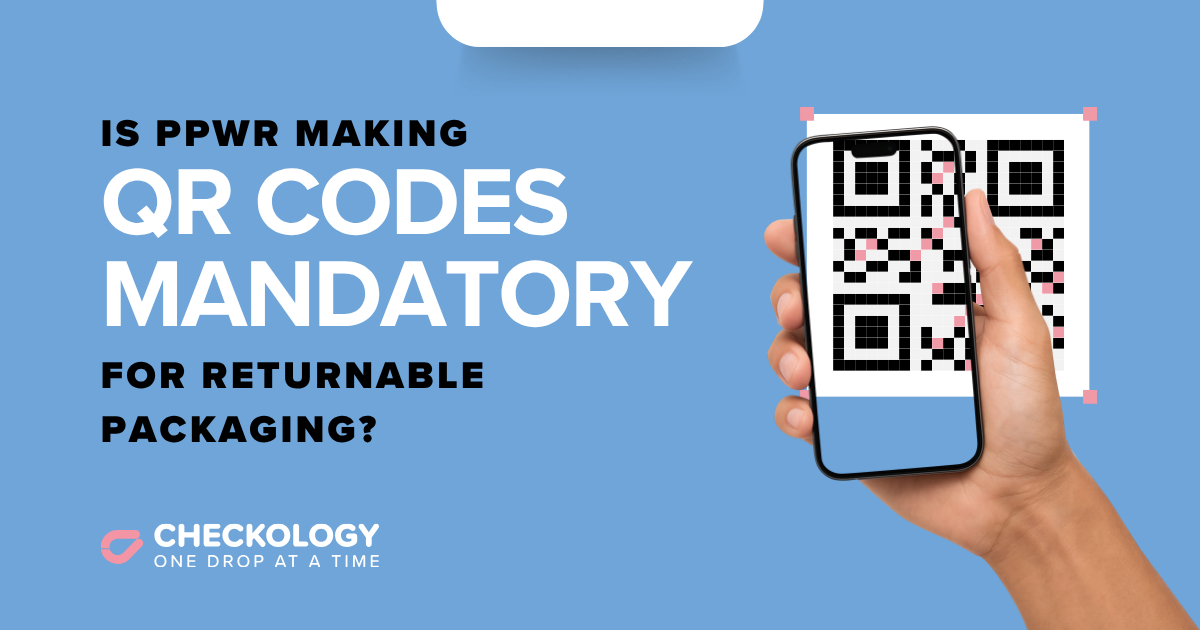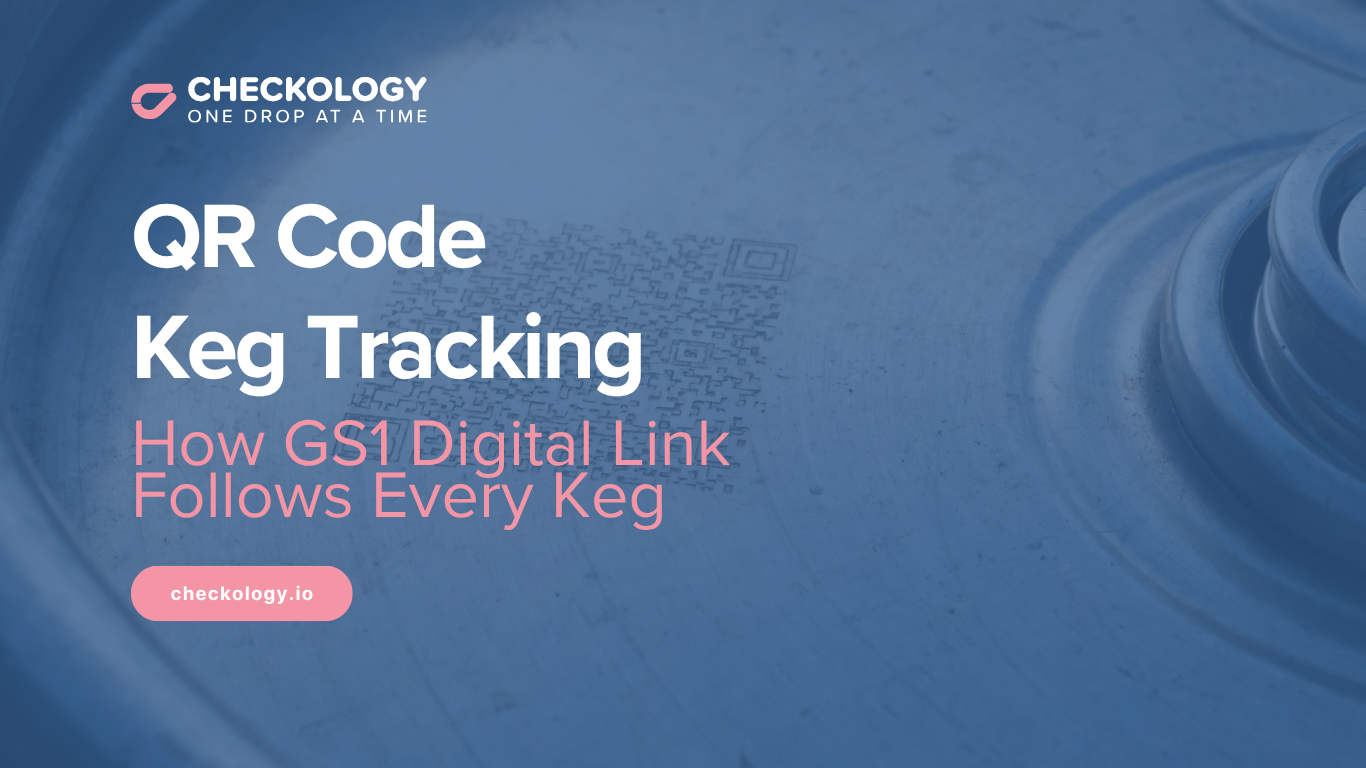
QR code keg tracking gives every keg a unique GS1 identity that cameras and phones can read. Checkology puts a serialised GS1 Digital Link QR code on each keg. Cameras on the kegline, at the palletiser and on the forklift then read it automatically. As a result, Keg Management Cloud knows which line washed each keg, which batch filled it and which customer has it. Nobody has to scan a keg by hand.
Why are kegs so hard to track?
A keg is an expensive asset that you use again and again. However, it spends most of its life outside the brewery. Distributors, bars and warehouses hold it for weeks. Out there, it becomes invisible. It stays too long with one customer, goes missing or never comes back.
The cost adds up quickly. For example, the British Beer & Pub Association put UK keg and cask losses at over £50 million a year (2015). At the time, a new keg cost more than £100. On top of that, new kegs can take six months or more to arrive. So every lost keg also cuts your delivery capacity.
What is a QR code, and why does it suit kegs?
A QR (Quick Response) code is a 2D symbol defined by the ISO/IEC 18004 standard. It stores data in a grid of dark and light squares. Three large finder patterns in the corners help a reader find the code fast, at any angle.
That is why QR code keg tracking works so well. For kegs, QR has three clear advantages over other technologies:
- It is passive. It needs no battery, SIM card or charging for the whole life of the keg.
- It costs the least per keg. QR is cheaper than RFID tags, Bluetooth beacons or GPS trackers.
- Any phone can read it. In contrast, a Data Matrix code usually needs a special app.
QR codes also correct their own errors. At level H, a reader can still decode the code when about 30% of it is damaged. That matters on a keg that faces scratches, caustic washing and years of handling.
QR code keg tracking vs RFID, BLE and GPS
Each technology has its place. However, only QR works on every keg at the lowest cost and with any phone.
| Technology | Cost per keg | Power | How you read it | Main limit |
| QR code (laser or label) | Lowest | None, passive | Camera or any smartphone | Needs line of sight |
| UHF RFID (on-metal tag) | Low to medium | None, passive | RFID reader and antennas | Needs special tags on steel; phones can’t read it |
| BLE beacon | Medium | Battery | Gateways or phones | Batteries to replace; gateway network |
| GPS / LTE tracker | Highest | Battery | Mobile network | Unit price, data plan and battery life |
So we use QR as the base layer on every keg. Then you can add other trackers only where live location pays off. The QR code printed on the tag keeps one identity across all of them.
What is GS1 Digital Link?
GS1 Digital Link is the GS1 standard that turns product and asset identifiers into web addresses. GS1 ratified version 1.7 in August 2026, and its syntax follows ISO/IEC 18975. In practice, one QR code works as a global ID for your systems and as a web link for people. This is the foundation of QR code keg tracking at Checkology.
According to the GS1 implementation guide, one code can replace several single-purpose codes. Behind the code sits a resolver. This web service sends each scan to the right information for the person who scans.
How does a GRAI identify each keg?
The GRAI (Global Returnable Asset Identifier) is the GS1 key for returnable assets, with application identifier 8003. GS1 designed it for crates, pallets, CO2 cylinders and kegs. A GRAI holds your GS1 Company Prefix, an asset type and a check digit. It can also carry a serial number of up to 16 characters. The serial makes each keg unique.
In a GS1 Digital Link, the GRAI sits inside a normal web address, right after the code 8003. Pallets carry their own GS1 key, the SSCC (AI 00). Meanwhile, the beer inside links to its GTIN (AI 01), its batch (AI 10) and its filling date.
How Checkology uses QR code keg tracking in Keg Management Cloud
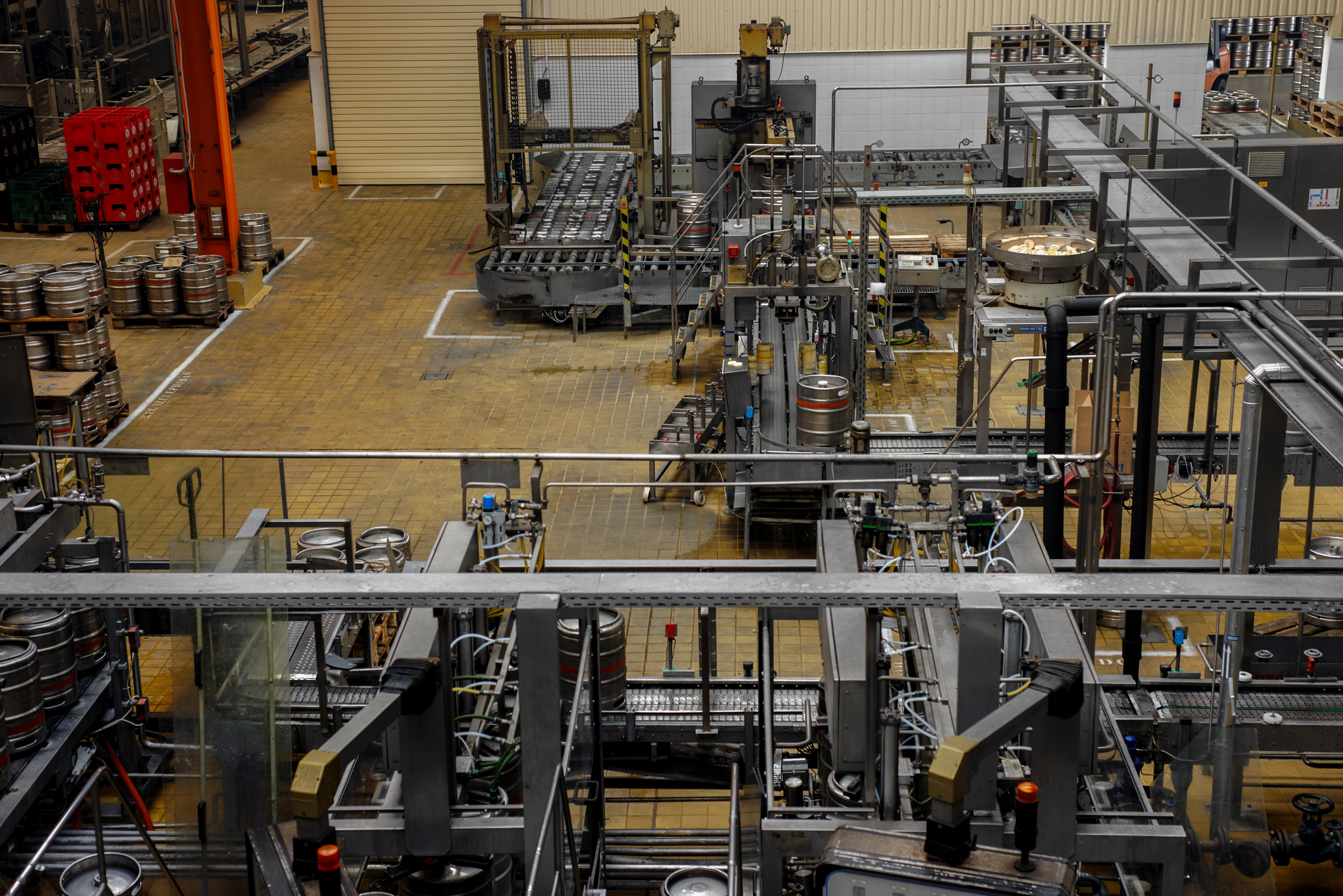
Keg Management Cloud reads the code automatically at every key point in the keg’s journey:
- Inlet camera. First, it checks that the code is readable and compares the serial with a blocklist. Damaged kegs and kegs due for maintenance leave the line before washing.
- Kegline entry camera. Next, it reads the code on the bottom of the keg, because kegs travel upside down. It records the line, the wash, the fill and the exact time.
- Palletiser camera. Then it reads each keg that goes onto a pallet and groups them into a virtual pallet.
- Forklift vision. Finally, a camera on the forklift identifies each pallet the forklift picks up. A tracker on the forklift sends its position to the software, so the system always knows where each pallet is on the brewery site. Each keg on the pallet moves in the system with it.
In short, nobody scans a single keg by hand from washing to loading. Our virtual pallet and forklift vision technology is patent pending.
Out in the market, the driver scans the pallet code at delivery and the empty kegs at collection. Customers simply scan with their phone.
One QR code, three audiences
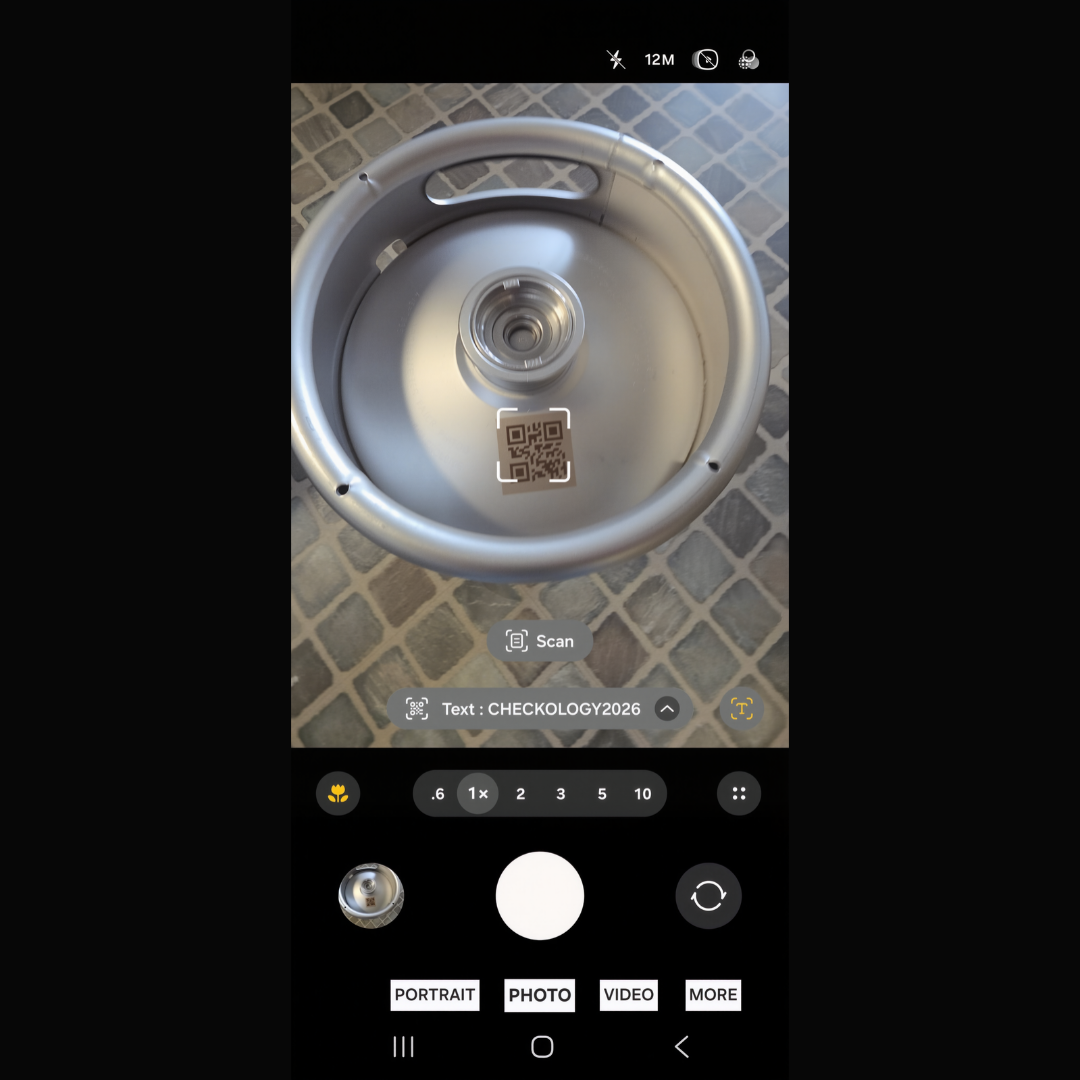
Our resolver shows different content to each person who scans:
- Consumers and bar staff see the beer style, the brewery, the filling date and the best-before date.
- Brewery and logistics teams log in to see keg type, cycle history, last wash line, current customer and maintenance status.
- Auditors see the reuse and rotation records they need for reports.
What does QR code keg tracking give a brewery?
Per-keg data changes how you manage your fleet:
- Traceability. If a batch has an issue, you recall specific kegs instead of a whole market.
- Faster rotation. You see how long each customer holds your kegs.
- Lower losses. You know which customers lose or keep the most kegs, so you can act.
- PPWR compliance. Under Regulation (EU) 2025/40, reusable packaging must be designed for a minimum number of rotations. In closed-loop systems, it must also carry a QR code or another open digital data carrier. That carrier must allow tracking of each unit and the calculation of its rotations. A serialised GS1 QR code on every keg does exactly that, so you show real rotations instead of average estimates.
How do you keep a keg QR code readable for years?
A calibrated verifier grades code quality on a scale from 0 to 4 (A to F). The overall grade is the lowest score across all measured parameters. Laser-marked codes on stainless steel follow ISO/IEC 29158, while printed labels follow ISO/IEC 15415.
GS1 asks for at least grade C (1.5) for QR codes on packaging. For kegs, we set a higher target in every marking specification. We also verify codes under the same lighting our line cameras use, so the grade predicts real read rates.